
Considering the weather right now, Rain, Rain seems like the perfect song for the season. It’s great for practicing quarter and barred eighth notes and so-mi or high/low pitches. Its simplicity also makes it great for use on barred instruments, which is what I’ll be focusing on today.
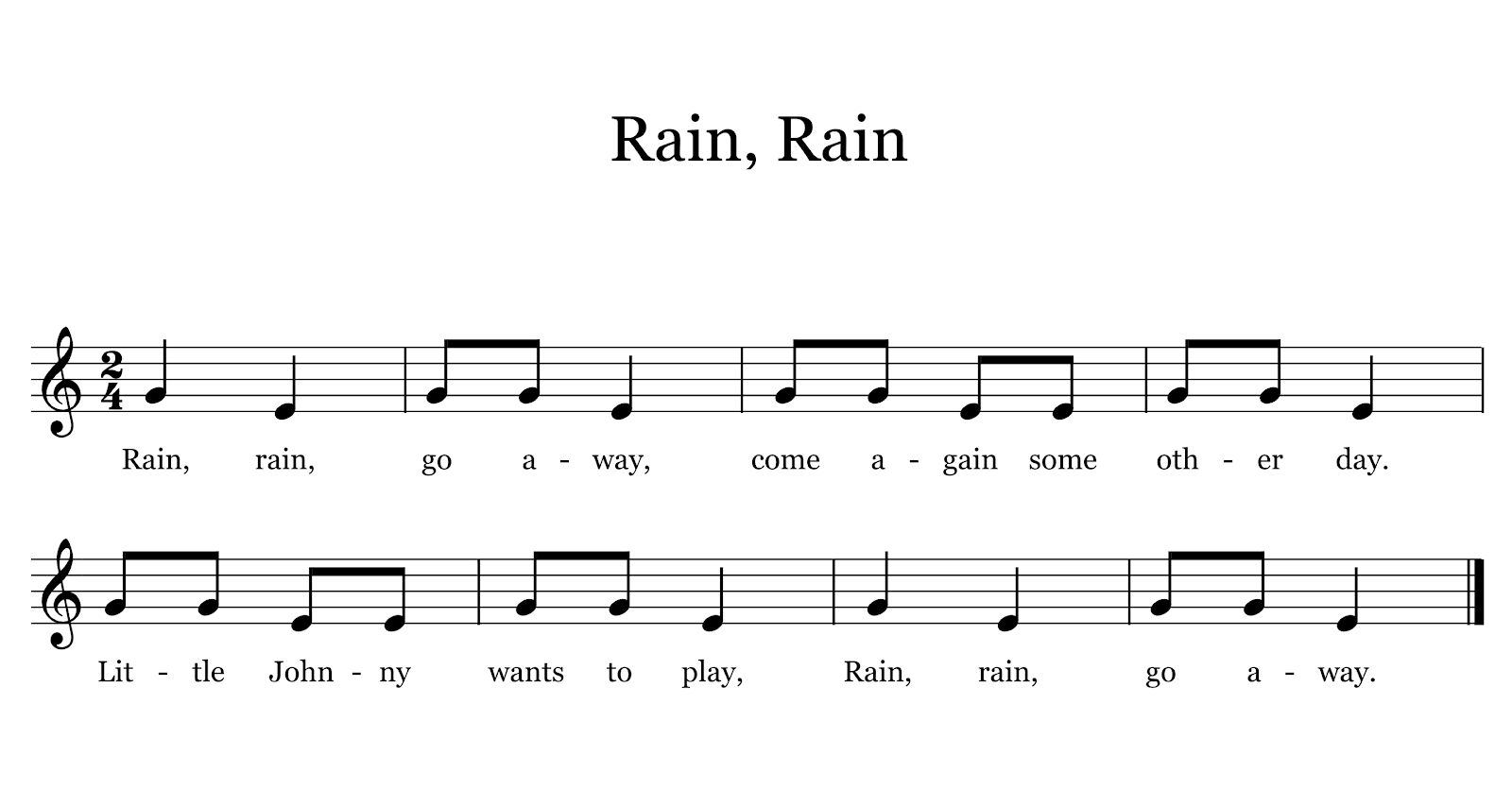
When working with repetitive pieces such as this, I think it’s important to have a plan in place so that it doesn’t start to feel monotonous. Monotony is the surest way to bore your students and tempt them into disengaging. One easy way to avoid monotony, is by splitting your class into groups and allowing them to rotate groups after a set time limit.
For example, You might have one group on Orff instruments, another singing, and yet another using rain sticks or ocean drums. Then, after going through the song once or twice, the students can rotate into another group. Eventually, they will have played or sang the song through six or more times without even realizing it.
The video below is from a resource in my shop, Rain Rain. You can use this to demonstrate how to play the piece on a barred instrument. This is great practice for alternating hands since students don’t have to change bars.
Once students have mastered playing Rain, Rain on a barred instrument, it’ll be a breeze for them to decode both the rhythms and pitches (if they haven’t pointed them out already). So pull out all those manipulatives you’ve been waiting to use and ask students to decode the rhythms, pitches, or both. They could use popsicle sticks, laminated rhythm cards, tiny erasers, or whatever manipulatives that work best for them.
Students can work in pairs, with one playing parts of the song on the instrument while the other decodes it using the manipulatives. You can dampen the classroom noise by having students use the mallet handles on the bars instead of the heads. Inevitably, students will want equal time on the instruments, so make sure the partners know to switch roles after the first line of the song.