The leaves aren’t dancing yet here in the Midwest, but they will be in a few weeks. That autumn chill will also settle in then, right around the same time kids start donning their costumes and asking neighbors for candy. It’s a good time of year to feature Amy Beach’s Dancing Leaves in your elementary music classroom.
This piece is fantastic for any age, but especially for K-2. The piano piece features fast rhythms that sound exactly like leaves “dancing” in the wind. It has a clear steady beat, and with a length of under two minutes, it’s great for your younger students’ gnat-like attention spans. This performance also has a few pauses, which can act as a fun little freeze moment.
You don’t have to do a deep-dive into every composer’s life story in order for students to listen to and interact with their music. Sometimes, a brief introduction is all that you need. When introducing composers to K-2, I liked to emphasize what the composers did as children, as I felt it was more relatable to my students. And honestly, who wouldn’t be impressed by a toddler who memorized 40 songs!?
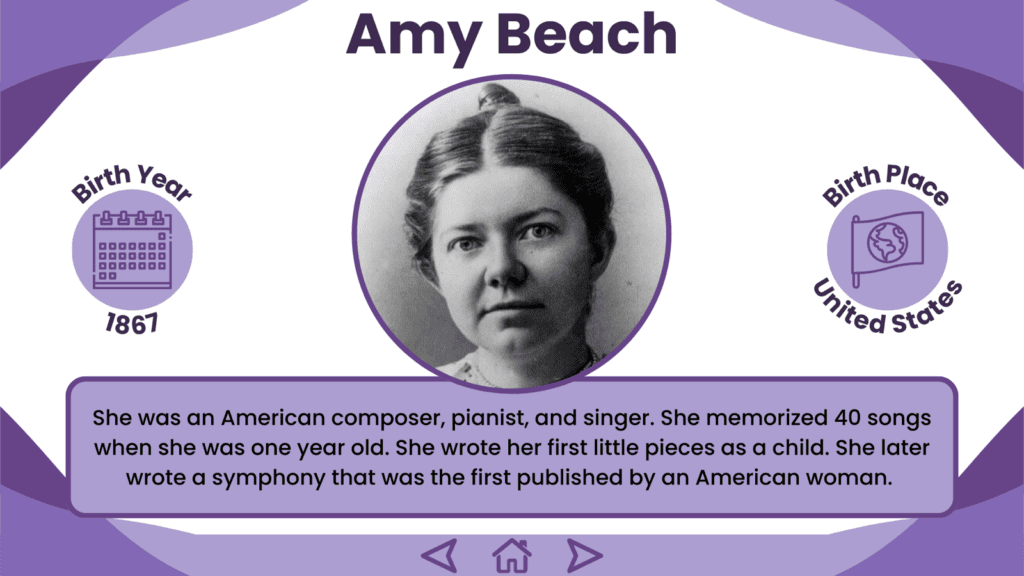
Want more composer bios like this? Look here.
After a short introduction, it’s time for students to move to the music. Dancing Leaves is perfect for practicing steady beat, and the title is really the only movement prompt you need. You can give students scarves or ribbon wands and tell them to pretend that they’re “leaves falling from the trees and dancing in the wind”.
It’s important that we give students a chance to listen to the same piece multiple times. Each time they listen, give them a focus point. The first time is an introduction, a chance for them to find the steady beat with their bodies. The second listen is a chance for them to notice what instruments they hear. With each repetition, encourage them to notice something they hadn’t noticed before and tie it to a specific music element such as tempo, dynamics, timbre, etc.
Now that they’ve got some energy out of their bodies and have become more familiar with the piece, they can put it down on paper. This part can be as simple or complex as you need it to be.
A simple example would be to ask students to draw what the music was about as they listen to the music again. Then, you can hang the finished drawings on a fall-themed bulletin board.
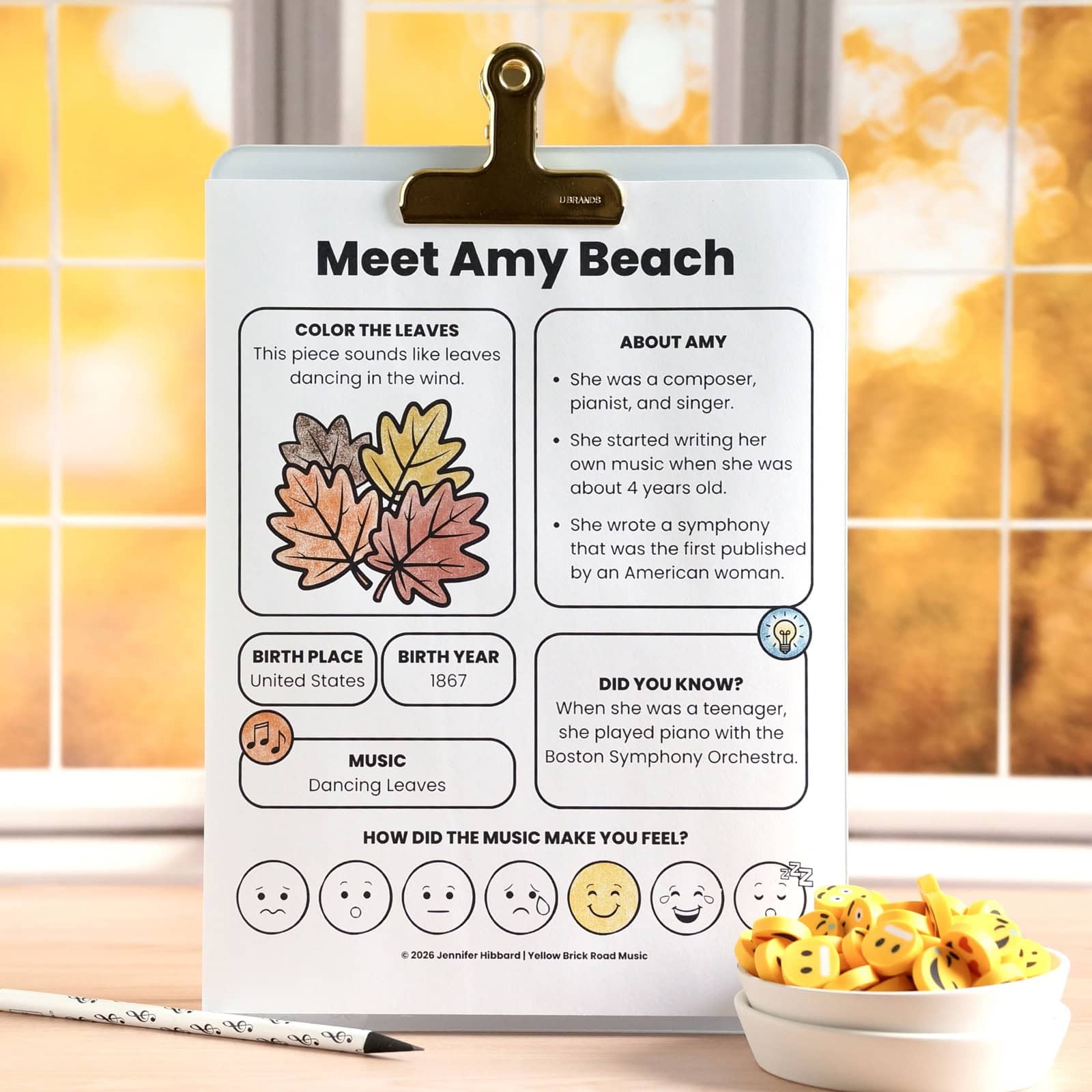
A more complex example would be a worksheet with instructions such as, “Color in the instruments you heard.” or “Color the emoji that shows how the music made you feel.”
This is a worksheet I modified from one of my existing resources to work specifically for Dancing Leaves.