I can see how outsiders might think that a recorder concert is easy to put on. The repertoire looks simple, the notes are few, and most adults are at least vaguely familiar with the instrument. But the reality is that a recorder concert, like any high-quality music performance, takes months of careful planning, rehearsals, and mental energy. Avoiding squeaks, sending out performance dates, rehearsing hundreds of students, and keeping that cursed left hand on top are all just the tip of the iceberg. The number of moving parts seems endless.
Back when I was a rookie teacher, I put on a performance for every grade level every year. Not because I wanted to, but because it was expected by my bosses at the time. And like any young inexperienced teacher, I threw myself headfirst into that logistical hurdle and did exactly what was expected of me. That experience taught me that my organization was (and still) is a super strength. By planning early, making checklists, and reusing documents from year to year, I saved myself so much time and stress. But even with those tools, there are still additional barriers unique to elementary music teachers. Just to name a few:
After a few years of experience, I created a system for concert prep that was easy to repeat each year. It was like a plug and play sort of thing. The system was templates, timelines, materials, and everything I needed for performances each year. All of this was usually broken down into four main categories: Planning, Materials, Promotion, and Wrap-Up. Each of these categories deals with an important part of the performance planning process, and most importantly, is a system that’s easy to repeat each year. Let’s start with planning.
Planning involves creating a concert timeline planner, deciding on themes, choosing repertoire, creating forms and templates for volunteers, deciding the space for rehearsals and performances, and making a concert day checklist. The most important item in this category is your concert timeline planner. I like to have the planner in the form of a checklist, starting at three months before your chosen concert date. That was the minimum time I needed to set dates, rehearse students, and get everything ready to go.
Some items on the timeline planner were:
Once you have a timeline planner taking you from three months prior all the way to concert day, you can start putting all your plans into motion. And one of the most exciting elements is choosing your repertoire and/or theme.
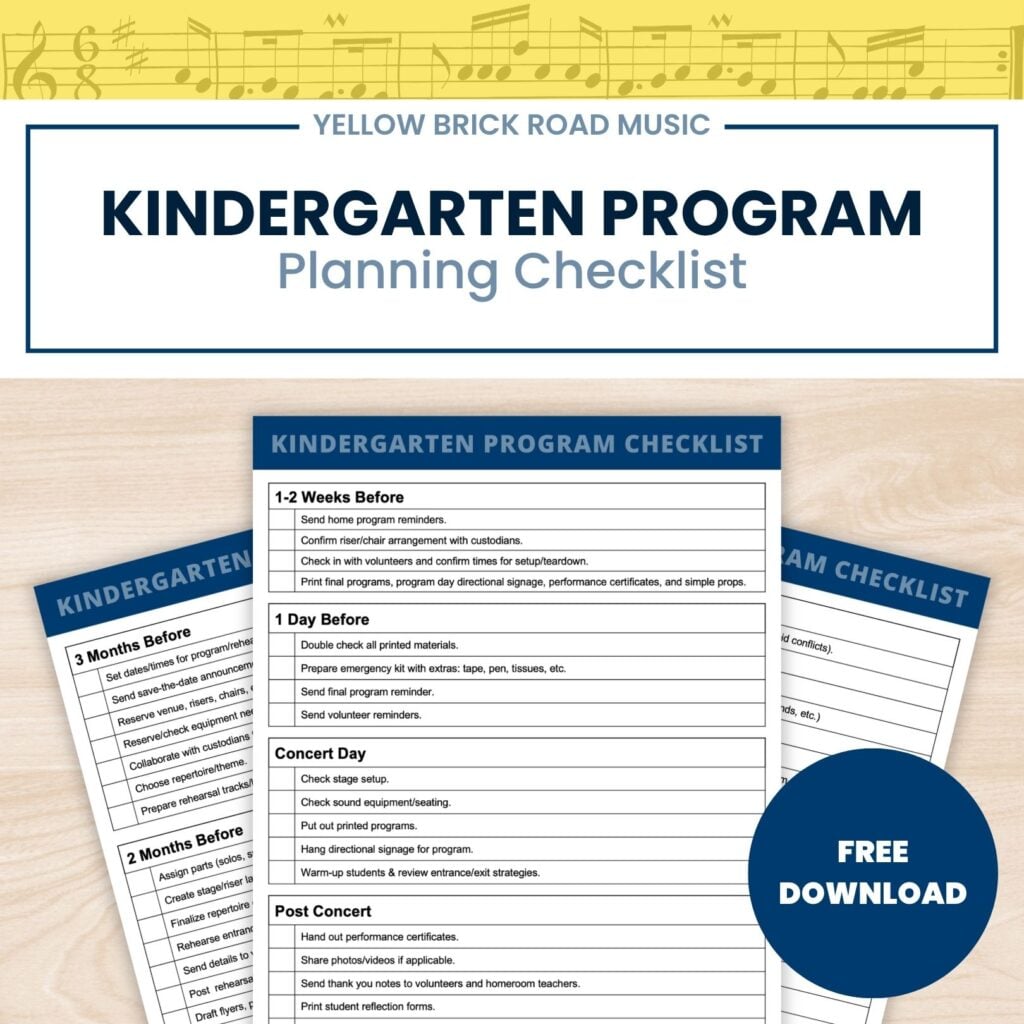
If you’d like to try using a concert checklist before building your own system, I also have a free concert day checklist you can download. It comes from my Kindergarten Program Planning Toolkit, but you can edit it for recorder concerts and other elementary programs.
You can grab the free checklist here: Free Kindergarten Music Program Checklist
My best advice for choosing repertoire is to keep it simple. Fall, winter, and spring concerts are common themes, and it’s easy to plug repertoire you already have on hand into a specific season.
Spring themes can include songs about rain, wind, flowers, and more. In terms of recorder pieces, that could include:
You might be thinking, “These pieces are so short. How will I fill an entire concert?” There are a few simple ways to make a short concert feel complete. One easy approach is to present each song in three parts:
Using this same three-part structure, you can add even more variety by changing who participates each time:
This also works as a great way to highlight your school’s performing arts program.
You can also think beyond published repertoire. Students don’t have to play only existing pieces. Having them compose simple music is another great option, especially if they are still limited in the notes they can play comfortably. Each class can create a short three-note composition and perform it at the concert. This gives families a chance to see students not just performing, but creating music as well.
Once your timeline is complete, it’s time to move on to promoting those plans to your audience. This is the most labor-intensive part of the process because you’ll need to create a lot of items from scratch if it’s your first concert. These might include:
The key idea in this step is that you are creating templates you can reuse year after year. Instead of starting from scratch each time, you build a basic version first and then copy it to customize for your current theme.
In practical terms, this means creating one original template and saving it. When you plan a new concert, you duplicate that template and adjust the details as needed.
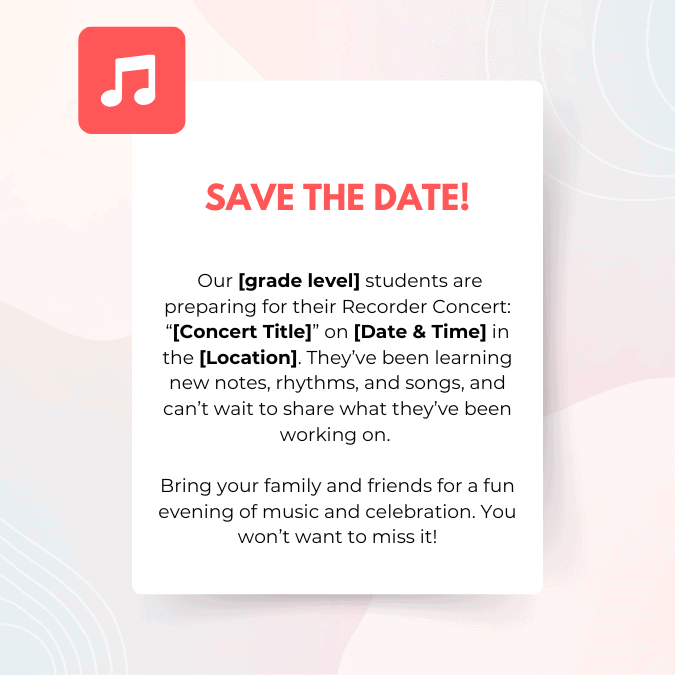
For example, think about your social media “Save the Date” posts. Your original, reusable template might look something like this:
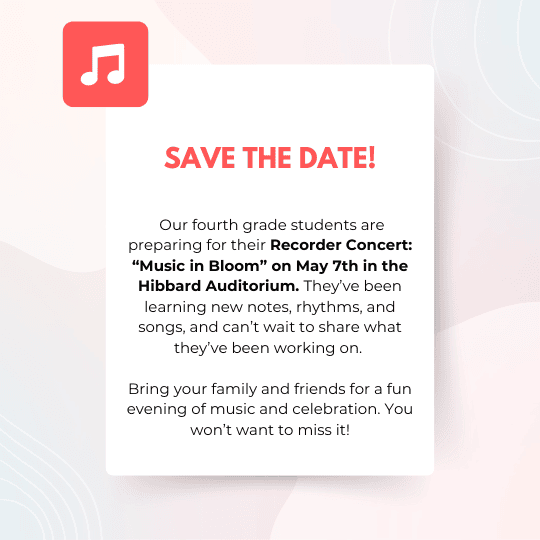
Meanwhile, your customized “Save the Date” post for this year’s concert might look like this:
Once the concert has been promoted and templates created and modified, it’s time to make the materials for students and performance day. This usually includes:
Again, if you’re able to, make these in the form of templates that you can reuse next year. For example, if you have students introduce each piece of music, that’s a script that you can reuse next year just by changing the name of the piece.
After the concert is over, it’s easy to breathe a sigh of relief and immediately move on to the next thing. However, having a solid plan for concert reflection can make your job easier. Instead of throwing students back into routine lesson plans, why not take a class or two to reflect on the concert? Reflections can be as complex as a written assignment or as simple as a fillable form where students can assess their performance and journal a few of their thoughts and feelings on the experience. Bonus, you can rest a bit while they reflect!
In addition, it’s incredibly important to thank the staff and volunteers who made the concert possible. A simple thank you note goes a long way in showing people your appreciation and acknowledging that performances require effort from a large group of helpers, not just the people on stage. So make sure to thank your custodians who prepared the event space, any parent volunteers who decorated the stage, and staff members who gave their time and encouragement.
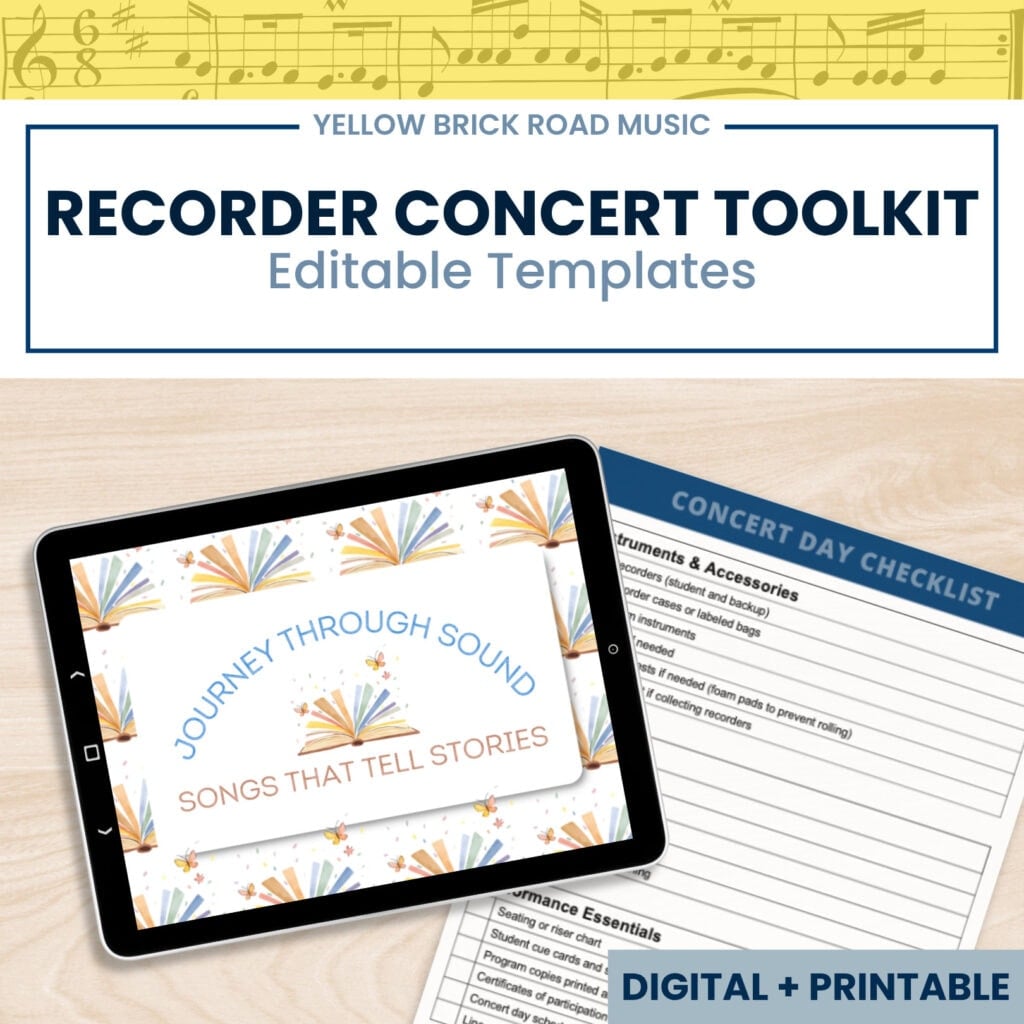
If you like the idea of using templates and repeatable systems for your concerts, I’ve put all of mine into one place in my Recorder Concert Toolkit.
It includes the same planning tools, forms, and templates I used to keep concerts less overwhelming from year to year. You can customize them to fit your own performance and save yourself hours of setup time.
You can learn more about it here: Editable Recorder Concert Toolkit | Google Templates, Slides & Forms Access