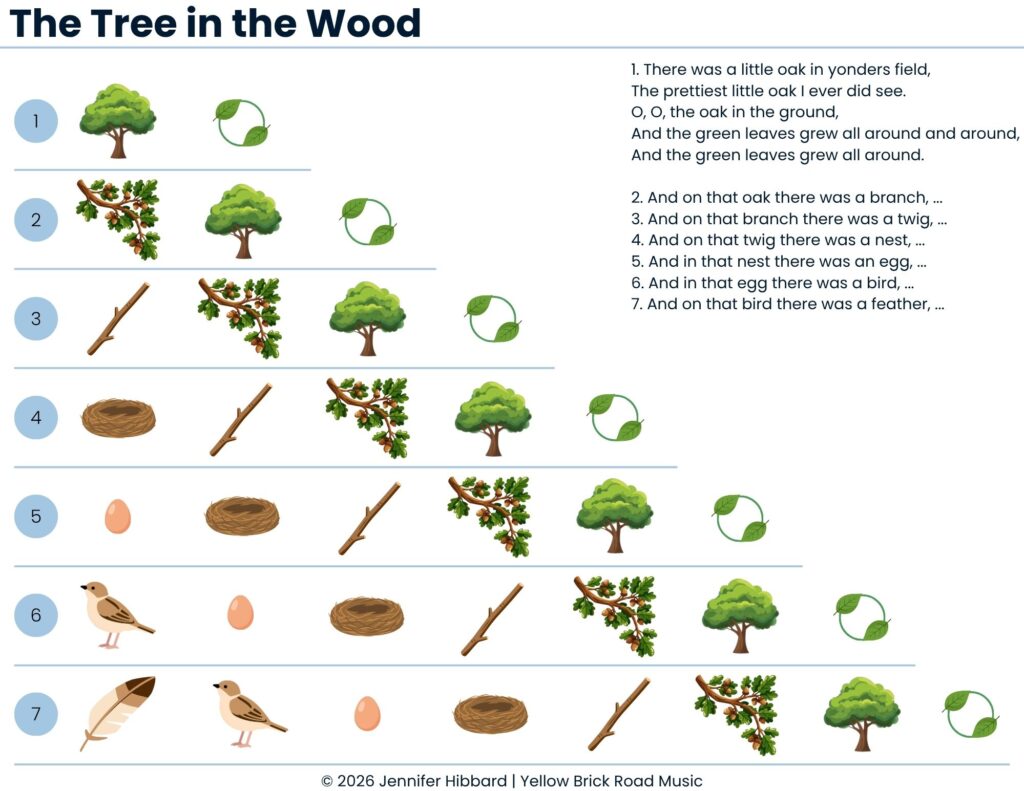
The Tree in the Wood is a cumulative song that you can use to teach form in your elementary music classroom. Form can be a tricky concept, but cumulative songs like this make it easy for students to see that repeating sections are one way that music can be organized.
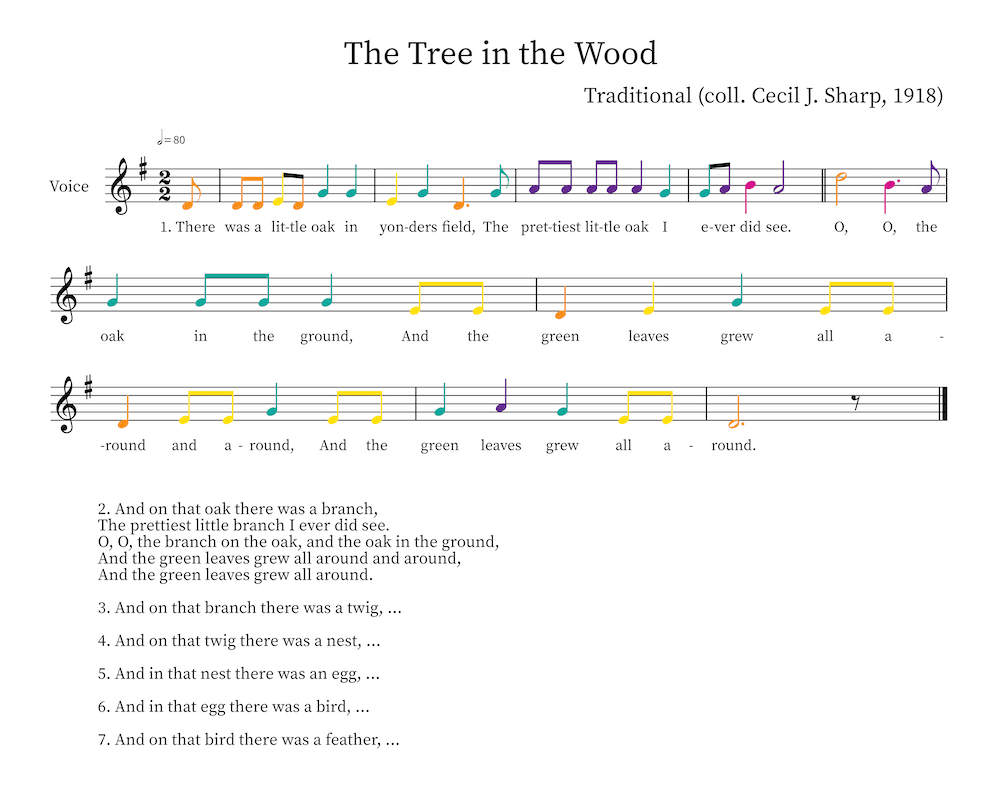
To start, consider all the ways that students can be physically active as they listen through the song the first few times. Encourage active listening by having them focus on the object at the end of each line: branch, twig, nest, egg, bird, and feather.
Have them show the motion of each object as they hear it. For branch or twig, they might stand up tall like a tree with their arm out to the side. For bird, they might flap their arms like wings. The first time through, go slowly and give them time to show the motion of each object. The second time through, go at normal speed and watch as they hurry to try to show the motion of each object before you move on to the next.
If your students need more practice with form, my Basics of Form lesson walks them through the concept step by step.
Are they tired from the movement yet? If so, move on to one of the next steps depending on your time and resources.
If you don’t have enough rhythm instruments for this next step, you can always substitute in body percussion. The first step will be to work collaboratively with the students to come up with an instrument (or body percussion) that fits each object. The sounds won’t match up perfectly or even make sense for some objects, and that’s okay! The point of this exercise is to give them an opportunity to follow the music, play at the correct time, and play with correct technique. Here are a few pairings you can try:
To keep things interesting, give students a chance to trade instruments. You could even create a pause mid-song just for this purpose.
After all the movement and singing, your students will be better prepared to sit down and follow along with a listening map. Listening maps are a great way for students to practice pre-reading skills. As they follow the pictures, they track from left to right, then return to the start of the next line, just like they would with a traditional score. Because each verse adds one more picture, they also get to see the song grow as they sing it.